
Call us now :08045801660
 Send Inquiry
 Send Inquiry
Mixed Bed Polisher
MOQ : 1 Piece
Mixed Bed Polisher Specification
- Technology
- Ion Exchange Resin
- Efficiency (%)
- >95%
- Noise Level
- Low (<65 dB)
- Feature
- High purification, corrosion resistant, efficient ion exchange
- Water Out Conductivity
- <0.1 S/cm
- Water in conductivity
- 20-100 S/cm
- Ph Level
- 6.5-7.5
- Usage & Applications
- Demineralized water production, boiler feed water, laboratory, industrial process water
- Frequency
- 50-60 Hz
- Flow Rate
- 500-2000 LPH
- Power Consumption
- 1-2 kW
- Recycle Rate
- 80-90%
- Pump Type
- Centrifugal
- Volume
- 60-100 Liters
- Voltage
- 220-240V
- Purity Level
- Up to 99%
- Power Source
- Electric
- Product Type
- Mixed Bed Polisher
- Water Source
- Raw/Pre-treated water
- Material
- Stainless Steel
- Automatic Grade
- Semi Automatic
- Drive Type
- Electric
- Filter Type
- Mixed Bed
- Capacity
- 500-2000 LPH
- Installation Type
- Floor Mounted
- Mobility
- Stationary/Floor Standing
- Control
- Manual/Automatic Valves
- Max Operating Temperature
- 45°C
- Resin Type
- Strong Acid Cation and Strong Base Anion Exchange Resin
- Inlet/Outlet Connection
- 1.5 Inch BSP/NPT
- Maintenance
- Easy resin replacement and cleaning
- Design
- Vertical Cylindrical
- Pre-filtration Requirement
- Yes (5-10 micron)
- Color
- Metallic/Silver
- Operating Pressure
- 2.5 - 4.0 Kg/cm²
Mixed Bed Polisher Trade Information
- Minimum Order Quantity
- 1 Piece
- Payment Terms
- Cash in Advance (CID)
- Supply Ability
- 9 Pieces Per Month
- Delivery Time
- 3 - 4 Days
- Main Domestic Market
- All India
About Mixed Bed Polisher
We are offering a Mixed Bed Polisher that is used to further purify water that has already been treated in a reverse osmosis or deionization plant. It contains a mixed bed of cationic & anionic resins that remove any remaining dissolved impurities in the water. The water is passed through the resin bed, & the resin particles exchange ions with the impurities, removing them from the water. The Mixed Bed Polisher is an essential component in maintaining the quality of high-purity water.
Advanced Water Polishing Technology
Our mixed bed polisher utilizes advanced ion exchange resins to efficiently remove ionic contaminants, ensuring ultrapure water production. Designed for both raw and pre-treated water, it achieves a high recycle rate of 80-90% while maintaining reliable performance under demanding conditions. This technology is optimal for applications where water purity and consistency are critical, such as laboratory analysis and industrial processes.
Designed for Durability and Ease of Use
Constructed from corrosion-resistant stainless steel and featuring a floor-mounted, stationary structure, this system ensures longevity and ease of maintenance. Quick resin replacement and accessible cleaning are standard, minimizing downtime. The system incorporates pre-filtration and user-friendly valve controls (manual or automatic), supporting smooth operation even in intensive usage scenarios.
Efficient and Sustainable Operation
With a power consumption of only 1-2 kW and a consistent flow rate of 500-2000 LPH, the mixed bed polisher delivers superior efficiency and a high purity yield (up to 99%) with minimal environmental impact. The centrifugal pump and electric drive ensure reliable, quiet performance, making this unit suitable for various industries requiring stringent water quality.
FAQs of Mixed Bed Polisher:
Q: How does the mixed bed polisher achieve high water purity levels?
A: The polisher uses strong acid cation and strong base anion exchange resins to efficiently remove dissolved ions from water, reducing conductivity to below 0.1 S/cm and achieving up to 99% purity. Pre-filtration (5-10 micron) ensures resins remain effective and water meets strict quality standards.Q: What is the recommended process for resin replacement and system cleaning?
A: Resin replacement and cleaning are designed to be straightforward. Regular inspections are advised based on the water source and usage. Simply depressurize the system, open the designated access ports, remove spent resin, clean the vessel, and reload with new resin as per manufacturer guidelines.Q: When should pre-filtration be performed before using the polisher?
A: Pre-filtration is essential and should be conducted before water enters the mixed bed polisher. Installing a 5-10 micron pre-filter protects the resin bed from particulates, extending its lifespan and maintaining purification efficiency.Q: Where is this mixed bed polisher most commonly used?
A: This system is ideal for demineralized water production in laboratories, boiler feed water treatment, and various industrial process water applications, especially where consistent, high-purity water is crucial.Q: What are the benefits of using this stainless steel, floor-mounted design?
A: The stainless steel build provides excellent corrosion resistance and structural stability, while the floor-mounted, vertical cylindrical design saves space and ensures safety during operation. These features enhance the units durability in demanding environments.Q: How does the semi-automatic control enhance operational convenience?
A: The inclusion of both manual and automatic valve options provides operators with flexibility for process control, while simplifying routine functions such as rinsing, regeneration, and maintenance, thus reducing operator intervention and potential for errors.Q: What are the typical usage and capacity ranges for this equipment?
A: This polisher suits flow rates from 500 to 2000 LPH and handles inlet water conductivities of 20-100 S/cm, making it adaptable for facilities with varying demands. It is compatible with both raw and pre-treated water sources and operates efficiently at pH levels of 6.5 to 7.5.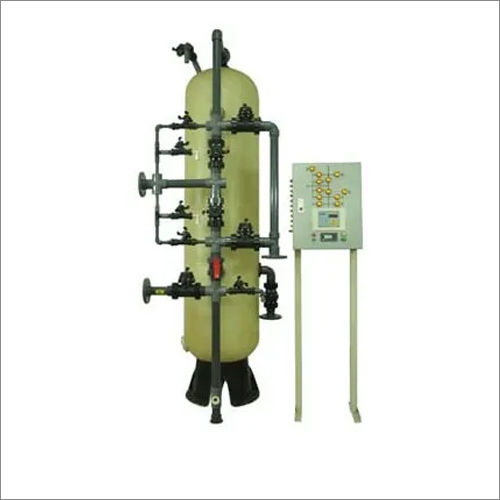
Tell us about your requirement

Price:
Quantity
Select Unit
- 50
- 100
- 200
- 250
- 500
- 1000+
Additional detail
Mobile number
Email


 Send Inquiry
Our Products
- DM Plant
- Electro Polished Tubes And Fittings
- High Purity Water Generation System
- High Purity Water Storage System
- Mixed Bed Deionization Plant
- Mixed Bed Polisher
- Ozonisation System
- Water Pre Treatment
- Pure Steam Generator
- RO EDI System
- Sanitary Heat Exchangers
- Sanitary Pumps
- SS Tanks And Housing
- WFI Generation Plant

B2/U19, A-1 Industrial Complex, Post Taluka Kaman, Vasai (East), Vasai - 401107, Maharashtra, India

 Send Inquiry
 Send SMS
Developed and Managed by Infocom Network Private Limited.
